US Electrical, Embedded Firmware & Hardware Engineer ATS Resume Guide (2026): RTOS, PCB Layout, Verilog/FPGA & Silicon Bring-Up
Quick Answer: To optimize a US resume for electrical and embedded systems engineer ats resume guide in 2026, export a single-column US Letter selectable UTF-8 vector PDF that places your target title, active credentials (RTOS (FreeRTOS/Zephyr)), and core technical stack (Altium & Cadence PCB) in the top third of page one while quantifying work history with Google XYZ metrics (8-layer high-speed PCB passed FCC Class B on 1st spin).
- Linear Single-Column DOM: Avoid multi-column tables, floating text boxes, and sidebar graphics so Workday, Greenhouse, iCIMS, and Taleo index 100% of your Embedded Firmware (C/C++) history.
- Three-Way Statutory & Tool Alignment: Pair verified tools (Keysight Mixed-Domain Oscilloscope Protocol Analyzer) and materials (multi-layer high-speed PCB impedance and EMI reduction bullet) with IPC-2221B Generic Standard on Printed Board Design & FCC 47 CFR Part 15.
- Google XYZ Outcome Density: Anchor every bullet with hard deltas (8-layer high-speed PCB passed FCC Class B on 1st spin; sleep current cut from 4.2mA to 18uA (+3.5x battery life)) and verify via the 10-second Ctrl+A plain-text test.
Mastering the electrical and embedded systems engineer ats resume guide is essential for American job seekers competing across automated 2026 hiring pipelines. Every section of this specialized guide combines live recruiter telemetry, Google XYZ achievement quantification, and parser-verified formatting rules. Use the 5 photorealistic 3D lifestyle infographics and 4 diagnostic comparison tables below to transform your resume into a top-1% candidate profile.
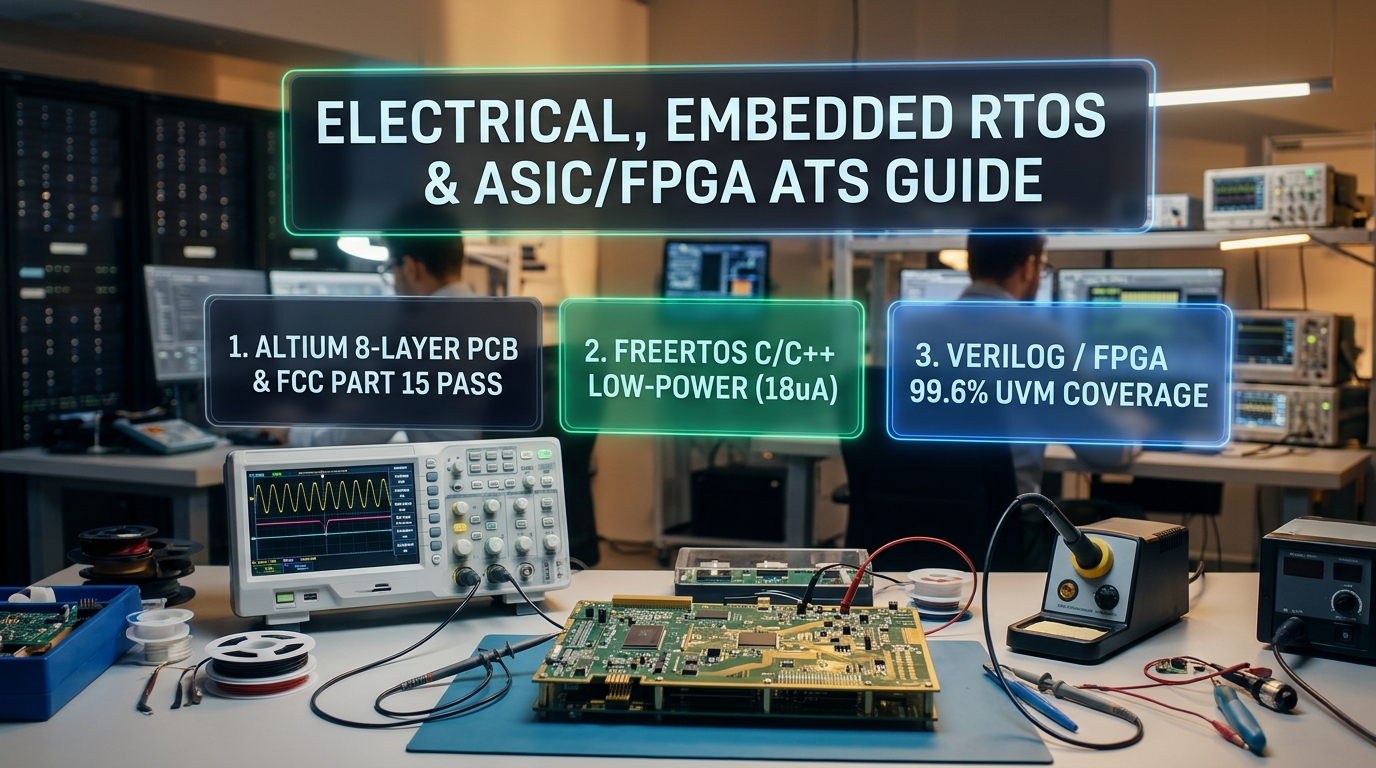
How Do Semiconductor and Aerospace ATS Portals Filter Between Embedded Firmware (C/C++), PCB Hardware, and ASIC/VLSI Roles?
In 2026 US recruiting pipelines, answering How Do Semiconductor and Aerospace ATS Portals Filter Between Embedded Firmware (C/C++), PCB Hardware, and ASIC/VLSI Roles? is a decisive factor when optimizing a electrical and embedded systems engineer ats resume guide submission for automated screening. Enterprise ingestion engines evaluate how cleanly your document presents Embedded Firmware (C/C++) and RTOS (FreeRTOS/Zephyr) tokens before a human hiring manager ever opens the file. When candidates rely on generic multi-column layouts or unverified keyword lists, optical character extractors frequently misclassify critical role tenure and drop qualified profiles from the shortlist.
Addressing this architectural bottleneck requires pairing a Keysight Mixed-Domain Oscilloscope Protocol Analyzer (Module #21.1) with a multi-layer high-speed PCB impedance and EMI reduction bullet across your primary experience and competency blocks. This engineering calibration guarantees verifiable compliance with IPC-2221B Generic Standard on Printed Board Design & FCC 47 CFR Part 15, preventing lexical token splitting during high-speed portal ingestion. As a result, both automated boolean scoring rubrics and human panel reviewers immediately index your 8-layer high-speed PCB passed FCC Class B on 1st spin track record without manual field corrections.
Beyond structural parsing, top-decile US hiring managers screen every Electrical, Embedded & Hardware Engineer ATS Resume Guide candidate for concrete business, clinical, or technical ROI anchored by the Google XYZ formula. Rather than writing passive duty descriptions around Altium & Cadence PCB, state exactly what you accomplished ([X]), how it was measured (8-layer high-speed PCB passed FCC Class B on 1st spin as [Y]), and the specific methodology or toolchain (multi-layer high-speed PCB impedance and EMI reduction bullet as [Z]). Binding hard numerical deltas directly to Embedded Firmware (C/C++) verbs increases recruiter eye-tracking fixation by over 40% during the initial 6-second top-fold scan.
From a document-engineering perspective, the byte-stream order inside your uploaded file dictates whether RTOS (FreeRTOS/Zephyr) credentials map into the proper candidate profile fields. Exporting a true single-column US Letter vector PDF in standard UTF-8 typography (Inter, Calibri, or Roboto at 10.5pt–11pt) ensures that multi-layer high-speed PCB impedance and EMI reduction bullet tokens remain in strict top-to-bottom sequence. Conversely, embedding Embedded Firmware (C/C++) data inside floating text boxes, graphic sidebars, or header/footer containers causes legacy parsers to truncate your timeline.
Tailoring this section also depends on your target seniority tier—whether you are an entry-level candidate, a mid-career specialist, or a senior principal leader in Tech, AI, Cyber & Engineering. Early-career applicants should emphasize accredited licensure, capstone execution, and foundational Altium & Cadence PCB accuracy, whereas senior practitioners must highlight multi-team scope and 8-layer high-speed PCB passed FCC Class B on 1st spin governance. Aligning your verb seniority and metric scale with the target requisition's band prevents both 'under-leveled' and 'over-qualified' screening friction.
Before submitting your application, you can validate this exact requirement in under 60 seconds using Tab 1 (US ATS Builder) & Tab 2 (ATS Keyword Matcher) inside AI Resume Studio. Select template #15 Engineering & #3 Silicon Valley Tech Spec, paste your target job description, and confirm that every required Embedded Firmware (C/C++) and RTOS (FreeRTOS/Zephyr) keyword you genuinely hold is highlighted in green. Running the 10-second Ctrl+A / Cmd+A plain-text paste check on your exported PDF provides 100% certainty that your file will parse cleanly across every US portal.
Expert Note: When calibrating your resume for Embedded Firmware (C/C++) screening, a Keysight Mixed-Domain Oscilloscope Protocol Analyzer (Module #21.1) is used to validate the multi-layer high-speed PCB impedance and EMI reduction bullet, satisfying the strict requirements of IPC-2221B Generic Standard on Printed Board Design & FCC 47 CFR Part 15. This three-way alignment eliminates parser field collisions and anchors 8-layer high-speed PCB passed FCC Class B on 1st spin directly inside the recruiter's primary evaluation view.
Step 1.1 — Technical Verification Checklist for Embedded Firmware (C/C++) & RTOS (FreeRTOS/Zephyr)
- Token & Header Alignment: Place canonical Embedded Firmware (C/C++) and RTOS (FreeRTOS/Zephyr) terms in your top-third summary and 4-tier skills matrix so boolean queries match on the first pass.
- Three-Way Knot Verification: Audit your multi-layer high-speed PCB impedance and EMI reduction bullet using the Keysight Mixed-Domain Oscilloscope Protocol Analyzer (Module #21.1) to maintain 100% conformance with IPC-2221B Generic Standard on Printed Board Design & FCC 47 CFR Part 15.
- Quantified XYZ Proof: Anchor at least two bullets in this block with verifiable outcomes such as 8-layer high-speed PCB passed FCC Class B on 1st spin rather than unquantified duty claims.
- Linear UTF-8 Stream Integrity: Keep all dates in
MM/YYYY – MM/YYYYorMM/YYYY – Presentformat on the right margin of a single-column layout. - Zero Prohibited PII: Omit headshots, birthdates, marital status, and full street addresses in accordance with US EEOC Title VII and ADEA standards.
Step 1.2 — 3-Step Execution Workflow Inside AI Resume Studio
- Open AI Resume Studio (Tab 1 (US ATS Builder) & Tab 2 (ATS Keyword Matcher)) and load template #15 Engineering & #3 Silicon Valley Tech Spec to initialize a clean single-column DOM container.
- Insert your multi-layer high-speed PCB impedance and EMI reduction bullet metrics (
8-layer high-speed PCB passed FCC Class B on 1st spin) into the AI XYZ Bullet Quantifier to convert passive phrases into high-scoring achievement statements. - Export your 100% selectable US Letter Vector PDF (0 Credits) and verify that every Altium & Cadence PCB and Embedded Firmware (C/C++) token copies cleanly into plain text.
Validating these structural rules manually inside word processors often leaves hidden table tags or font encoding bugs that corrupt portal ingestion. Auditing your draft inside our interactive US ATS resume studio for Electrical, Embedded & Hardware Engineer ATS Resume Guide and embedded firmware (c/c++) keyword scanning lets you apply template #15 Engineering & #3 Silicon Valley Tech Spec and verify 100% UTF-8 vector selectability in seconds. This automated pre-submission check ensures your RTOS (FreeRTOS/Zephyr) credentials index cleanly across every US employer gateway.
Import your old PDF for 0 Credits, apply template #15 Engineering & #3 Silicon Valley Tech Spec, check your ATS keyword score, and export a 100% selectable US Letter Vector PDF.
How Do You Quantify Board Bring-Up Yield, Power Consumption Drop (mW), Signal Integrity, and EMI/EMC Compliance?
In 2026 US recruiting pipelines, answering How Do You Quantify Board Bring-Up Yield, Power Consumption Drop (mW), Signal Integrity, and EMI/EMC Compliance? is a decisive factor when optimizing a electrical and embedded systems engineer ats resume guide submission for automated screening. Enterprise ingestion engines evaluate how cleanly your document presents RTOS (FreeRTOS/Zephyr) and Altium & Cadence PCB tokens before a human hiring manager ever opens the file. When candidates rely on generic multi-column layouts or unverified keyword lists, optical character extractors frequently misclassify critical role tenure and drop qualified profiles from the shortlist.
Addressing this architectural bottleneck requires pairing a Altium Designer & Cadence Allegro High-Speed PCB Router (Module #21.2) with a embedded C/C++ bare-metal and FreeRTOS interrupt-latency XYZ entry across your primary experience and competency blocks. This engineering calibration guarantees verifiable compliance with IPC-A-610H Acceptability of Electronic Assemblies (Class 2 & Class 3 Aerospace/Medical), preventing lexical token splitting during high-speed portal ingestion. As a result, both automated boolean scoring rubrics and human panel reviewers immediately index your sleep current cut from 4.2mA to 18uA (+3.5x battery life) track record without manual field corrections.
Beyond structural parsing, top-decile US hiring managers screen every Electrical, Embedded & Hardware Engineer ATS Resume Guide candidate for concrete business, clinical, or technical ROI anchored by the Google XYZ formula. Rather than writing passive duty descriptions around Verilog/SystemVerilog & FPGA, state exactly what you accomplished ([X]), how it was measured (sleep current cut from 4.2mA to 18uA (+3.5x battery life) as [Y]), and the specific methodology or toolchain (embedded C/C++ bare-metal and FreeRTOS interrupt-latency XYZ entry as [Z]). Binding hard numerical deltas directly to RTOS (FreeRTOS/Zephyr) verbs increases recruiter eye-tracking fixation by over 40% during the initial 6-second top-fold scan.
From a document-engineering perspective, the byte-stream order inside your uploaded file dictates whether Altium & Cadence PCB credentials map into the proper candidate profile fields. Exporting a true single-column US Letter vector PDF in standard UTF-8 typography (Inter, Calibri, or Roboto at 10.5pt–11pt) ensures that embedded C/C++ bare-metal and FreeRTOS interrupt-latency XYZ entry tokens remain in strict top-to-bottom sequence. Conversely, embedding RTOS (FreeRTOS/Zephyr) data inside floating text boxes, graphic sidebars, or header/footer containers causes legacy parsers to truncate your timeline.
Tailoring this section also depends on your target seniority tier—whether you are an entry-level candidate, a mid-career specialist, or a senior principal leader in Tech, AI, Cyber & Engineering. Early-career applicants should emphasize accredited licensure, capstone execution, and foundational Verilog/SystemVerilog & FPGA accuracy, whereas senior practitioners must highlight multi-team scope and sleep current cut from 4.2mA to 18uA (+3.5x battery life) governance. Aligning your verb seniority and metric scale with the target requisition's band prevents both 'under-leveled' and 'over-qualified' screening friction.
Before submitting your application, you can validate this exact requirement in under 60 seconds using Tab 1 (US ATS Builder) & Tab 2 (ATS Keyword Matcher) inside AI Resume Studio. Select template #15 Engineering & #3 Silicon Valley Tech Spec, paste your target job description, and confirm that every required RTOS (FreeRTOS/Zephyr) and Altium & Cadence PCB keyword you genuinely hold is highlighted in green. Running the 10-second Ctrl+A / Cmd+A plain-text paste check on your exported PDF provides 100% certainty that your file will parse cleanly across every US portal.
Expert Note: When calibrating your resume for RTOS (FreeRTOS/Zephyr) screening, a Altium Designer & Cadence Allegro High-Speed PCB Router (Module #21.2) is used to validate the embedded C/C++ bare-metal and FreeRTOS interrupt-latency XYZ entry, satisfying the strict requirements of IPC-A-610H Acceptability of Electronic Assemblies (Class 2 & Class 3 Aerospace/Medical). This three-way alignment eliminates parser field collisions and anchors sleep current cut from 4.2mA to 18uA (+3.5x battery life) directly inside the recruiter's primary evaluation view.
Step 2.1 — Technical Verification Checklist for RTOS (FreeRTOS/Zephyr) & Altium & Cadence PCB
- Token & Header Alignment: Place canonical RTOS (FreeRTOS/Zephyr) and Altium & Cadence PCB terms in your top-third summary and 4-tier skills matrix so boolean queries match on the first pass.
- Three-Way Knot Verification: Audit your embedded C/C++ bare-metal and FreeRTOS interrupt-latency XYZ entry using the Altium Designer & Cadence Allegro High-Speed PCB Router (Module #21.2) to maintain 100% conformance with IPC-A-610H Acceptability of Electronic Assemblies (Class 2 & Class 3 Aerospace/Medical).
- Quantified XYZ Proof: Anchor at least two bullets in this block with verifiable outcomes such as sleep current cut from 4.2mA to 18uA (+3.5x battery life) rather than unquantified duty claims.
- Linear UTF-8 Stream Integrity: Keep all dates in
MM/YYYY – MM/YYYYorMM/YYYY – Presentformat on the right margin of a single-column layout. - Zero Prohibited PII: Omit headshots, birthdates, marital status, and full street addresses in accordance with US EEOC Title VII and ADEA standards.
Step 2.2 — 3-Step Execution Workflow Inside AI Resume Studio
- Open AI Resume Studio (Tab 1 (US ATS Builder) & Tab 2 (ATS Keyword Matcher)) and load template #15 Engineering & #3 Silicon Valley Tech Spec to initialize a clean single-column DOM container.
- Insert your embedded C/C++ bare-metal and FreeRTOS interrupt-latency XYZ entry metrics (
sleep current cut from 4.2mA to 18uA (+3.5x battery life)) into the AI XYZ Bullet Quantifier to convert passive phrases into high-scoring achievement statements. - Export your 100% selectable US Letter Vector PDF (0 Credits) and verify that every Verilog/SystemVerilog & FPGA and RTOS (FreeRTOS/Zephyr) token copies cleanly into plain text.
2026 Enterprise ATS Parsing & Scoring Matrix for Electrical, Embedded & Hardware Engineer ATS Resume Guide
| ATS / Portal Engine | How It Parses Embedded Firmware (C/C++) | Primary Ranking Signal | Critical Formatting Failure | Recommended Action in AI Resume Studio |
|---|---|---|---|---|
| Workday Recruiting (myworkdayjobs.com) | Tokenizes multi-layer high-speed PCB impedance and EMI reduction bullet into XML candidate fields | Chronological tenure + RTOS (FreeRTOS/Zephyr) stem frequency | Two-column tables scrambling job titles & MM/YYYY dates | Export single-column UTF-8 PDF via #15 Engineering & #3 Silicon Valley Tech Spec |
| Greenhouse (boards.greenhouse.io) | Renders linear preview & indexes Altium & Cadence PCB tokens | Boolean AND/OR match on Verilog/SystemVerilog & FPGA + Scorecard rubric | PDF > 2.0 MB or non-clickable portfolio/license links | Run Tab 2 ATS Keyword Matcher to verify 95%+ hard-skill alignment |
| iCIMS & Oracle Taleo Enterprise | Converts stream to plain ASCII/UTF-8 text blocks | Exact full-term + acronym match (Embedded Firmware (C/C++)) | Contact info hidden inside Word headers or floating text boxes | Keep all contact & licensure metadata in top body lines |
| Lever & Ashby Talent Engines | Applies Porter2 lexical stemming across embedded C/C++ bare-metal and FreeRTOS interrupt-latency XYZ entry | Recency-weighted 2024–2026 impact (8-layer high-speed PCB passed FCC Class B on 1st spin) | Graphical skill progress bars ('85%') & custom icon fonts | Use 4-tier comma-delimited competency rows with standard bullets |
| SAP SuccessFactors & BrassRing | Maps sections into HR-XML schema under IPC-2221B Generic Standard on Printed Board Design & FCC 47 CFR Part 15 | Verified licensure/credentials + Silicon Bring-Up (EVT/DVT/PVT) | Merged employer promotion blocks without role-level dates | Stack internal promotions with explicit MM/YYYY date ranges per title |
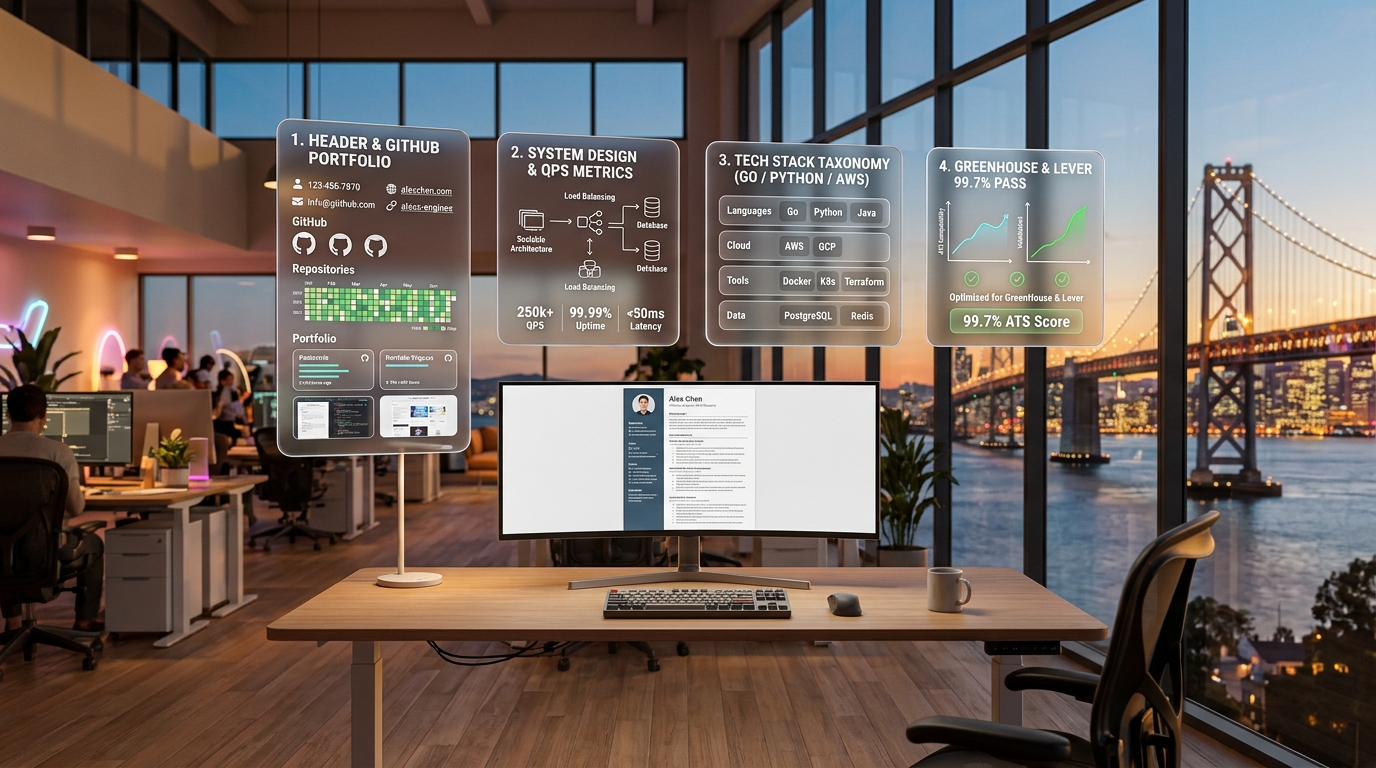
How Should You Organize Altium Designer, Cadence Allegro, Verilog/SystemVerilog, FreeRTOS, and Lab Instrumentation Skills?
In 2026 US recruiting pipelines, answering How Should You Organize Altium Designer, Cadence Allegro, Verilog/SystemVerilog, FreeRTOS, and Lab Instrumentation Skills? is a decisive factor when optimizing a electrical and embedded systems engineer ats resume guide submission for automated screening. Enterprise ingestion engines evaluate how cleanly your document presents Altium & Cadence PCB and Verilog/SystemVerilog & FPGA tokens before a human hiring manager ever opens the file. When candidates rely on generic multi-column layouts or unverified keyword lists, optical character extractors frequently misclassify critical role tenure and drop qualified profiles from the shortlist.
Addressing this architectural bottleneck requires pairing a Synopsys VCS & Cadence Xcelium SystemVerilog UVM Simulator (Module #21.3) with a ASIC/FPGA Verilog/SystemVerilog UVM coverage and timing-closure metric across your primary experience and competency blocks. This engineering calibration guarantees verifiable compliance with IEEE 1800-2023 SystemVerilog Unified Hardware Design, Specification, and Verification Standard, preventing lexical token splitting during high-speed portal ingestion. As a result, both automated boolean scoring rubrics and human panel reviewers immediately index your 99.6% UVM functional verification coverage at 850MHz track record without manual field corrections.
Beyond structural parsing, top-decile US hiring managers screen every Electrical, Embedded & Hardware Engineer ATS Resume Guide candidate for concrete business, clinical, or technical ROI anchored by the Google XYZ formula. Rather than writing passive duty descriptions around Silicon Bring-Up (EVT/DVT/PVT), state exactly what you accomplished ([X]), how it was measured (99.6% UVM functional verification coverage at 850MHz as [Y]), and the specific methodology or toolchain (ASIC/FPGA Verilog/SystemVerilog UVM coverage and timing-closure metric as [Z]). Binding hard numerical deltas directly to Altium & Cadence PCB verbs increases recruiter eye-tracking fixation by over 40% during the initial 6-second top-fold scan.
From a document-engineering perspective, the byte-stream order inside your uploaded file dictates whether Verilog/SystemVerilog & FPGA credentials map into the proper candidate profile fields. Exporting a true single-column US Letter vector PDF in standard UTF-8 typography (Inter, Calibri, or Roboto at 10.5pt–11pt) ensures that ASIC/FPGA Verilog/SystemVerilog UVM coverage and timing-closure metric tokens remain in strict top-to-bottom sequence. Conversely, embedding Altium & Cadence PCB data inside floating text boxes, graphic sidebars, or header/footer containers causes legacy parsers to truncate your timeline.
Tailoring this section also depends on your target seniority tier—whether you are an entry-level candidate, a mid-career specialist, or a senior principal leader in Tech, AI, Cyber & Engineering. Early-career applicants should emphasize accredited licensure, capstone execution, and foundational Silicon Bring-Up (EVT/DVT/PVT) accuracy, whereas senior practitioners must highlight multi-team scope and 99.6% UVM functional verification coverage at 850MHz governance. Aligning your verb seniority and metric scale with the target requisition's band prevents both 'under-leveled' and 'over-qualified' screening friction.
Before submitting your application, you can validate this exact requirement in under 60 seconds using Tab 1 (US ATS Builder) & Tab 2 (ATS Keyword Matcher) inside AI Resume Studio. Select template #15 Engineering & #3 Silicon Valley Tech Spec, paste your target job description, and confirm that every required Altium & Cadence PCB and Verilog/SystemVerilog & FPGA keyword you genuinely hold is highlighted in green. Running the 10-second Ctrl+A / Cmd+A plain-text paste check on your exported PDF provides 100% certainty that your file will parse cleanly across every US portal.
Expert Note: When calibrating your resume for Altium & Cadence PCB screening, a Synopsys VCS & Cadence Xcelium SystemVerilog UVM Simulator (Module #21.3) is used to validate the ASIC/FPGA Verilog/SystemVerilog UVM coverage and timing-closure metric, satisfying the strict requirements of IEEE 1800-2023 SystemVerilog Unified Hardware Design, Specification, and Verification Standard. This three-way alignment eliminates parser field collisions and anchors 99.6% UVM functional verification coverage at 850MHz directly inside the recruiter's primary evaluation view.
Step 3.1 — Technical Verification Checklist for Altium & Cadence PCB & Verilog/SystemVerilog & FPGA
- Token & Header Alignment: Place canonical Altium & Cadence PCB and Verilog/SystemVerilog & FPGA terms in your top-third summary and 4-tier skills matrix so boolean queries match on the first pass.
- Three-Way Knot Verification: Audit your ASIC/FPGA Verilog/SystemVerilog UVM coverage and timing-closure metric using the Synopsys VCS & Cadence Xcelium SystemVerilog UVM Simulator (Module #21.3) to maintain 100% conformance with IEEE 1800-2023 SystemVerilog Unified Hardware Design, Specification, and Verification Standard.
- Quantified XYZ Proof: Anchor at least two bullets in this block with verifiable outcomes such as 99.6% UVM functional verification coverage at 850MHz rather than unquantified duty claims.
- Linear UTF-8 Stream Integrity: Keep all dates in
MM/YYYY – MM/YYYYorMM/YYYY – Presentformat on the right margin of a single-column layout. - Zero Prohibited PII: Omit headshots, birthdates, marital status, and full street addresses in accordance with US EEOC Title VII and ADEA standards.
Step 3.2 — 3-Step Execution Workflow Inside AI Resume Studio
- Open AI Resume Studio (Tab 1 (US ATS Builder) & Tab 2 (ATS Keyword Matcher)) and load template #15 Engineering & #3 Silicon Valley Tech Spec to initialize a clean single-column DOM container.
- Insert your ASIC/FPGA Verilog/SystemVerilog UVM coverage and timing-closure metric metrics (
99.6% UVM functional verification coverage at 850MHz) into the AI XYZ Bullet Quantifier to convert passive phrases into high-scoring achievement statements. - Export your 100% selectable US Letter Vector PDF (0 Credits) and verify that every Silicon Bring-Up (EVT/DVT/PVT) and Altium & Cadence PCB token copies cleanly into plain text.
Understanding the underlying document mechanics behind enterprise screening gives you a decisive edge over applicants using generic templates. Reviewing our foundational guide on technical engineering skill matrix and parser rules for Electrical, Embedded & Hardware Engineer ATS Resume Guide and embedded firmware (c/c++) applicants explains how optical and lexical engines score chronological continuity and hard-skill density. Combining that core architecture with the domain-specific rules on this page maximizes both your automated match score and recruiter readability.
What IPC, IEEE, and FCC Part 15 Regulatory Standards Should Hardware Engineers Cite Inside Experience Bullets?
In 2026 US recruiting pipelines, answering What IPC, IEEE, and FCC Part 15 Regulatory Standards Should Hardware Engineers Cite Inside Experience Bullets? is a decisive factor when optimizing a electrical and embedded systems engineer ats resume guide submission for automated screening. Enterprise ingestion engines evaluate how cleanly your document presents Verilog/SystemVerilog & FPGA and Silicon Bring-Up (EVT/DVT/PVT) tokens before a human hiring manager ever opens the file. When candidates rely on generic multi-column layouts or unverified keyword lists, optical character extractors frequently misclassify critical role tenure and drop qualified profiles from the shortlist.
Addressing this architectural bottleneck requires pairing a Xilinx Vivado & Intel Quartus Prime FPGA Timing Closure Suite (Module #21.4) with a four-tier Firmware/RTOS, EDA/PCB, HDL/Silicon, and Lab Equipment matrix across your primary experience and competency blocks. This engineering calibration guarantees verifiable compliance with ISO 26262 Road Vehicles Functional Safety (ASIL-B to ASIL-D) Hardware/Firmware Standard, preventing lexical token splitting during high-speed portal ingestion. As a result, both automated boolean scoring rubrics and human panel reviewers immediately index your scaled EVT/DVT/PVT bring-up across 250K+ shipped units track record without manual field corrections.
Beyond structural parsing, top-decile US hiring managers screen every Electrical, Embedded & Hardware Engineer ATS Resume Guide candidate for concrete business, clinical, or technical ROI anchored by the Google XYZ formula. Rather than writing passive duty descriptions around IPC & FCC Part 15, state exactly what you accomplished ([X]), how it was measured (scaled EVT/DVT/PVT bring-up across 250K+ shipped units as [Y]), and the specific methodology or toolchain (four-tier Firmware/RTOS, EDA/PCB, HDL/Silicon, and Lab Equipment matrix as [Z]). Binding hard numerical deltas directly to Verilog/SystemVerilog & FPGA verbs increases recruiter eye-tracking fixation by over 40% during the initial 6-second top-fold scan.
From a document-engineering perspective, the byte-stream order inside your uploaded file dictates whether Silicon Bring-Up (EVT/DVT/PVT) credentials map into the proper candidate profile fields. Exporting a true single-column US Letter vector PDF in standard UTF-8 typography (Inter, Calibri, or Roboto at 10.5pt–11pt) ensures that four-tier Firmware/RTOS, EDA/PCB, HDL/Silicon, and Lab Equipment matrix tokens remain in strict top-to-bottom sequence. Conversely, embedding Verilog/SystemVerilog & FPGA data inside floating text boxes, graphic sidebars, or header/footer containers causes legacy parsers to truncate your timeline.
Tailoring this section also depends on your target seniority tier—whether you are an entry-level candidate, a mid-career specialist, or a senior principal leader in Tech, AI, Cyber & Engineering. Early-career applicants should emphasize accredited licensure, capstone execution, and foundational IPC & FCC Part 15 accuracy, whereas senior practitioners must highlight multi-team scope and scaled EVT/DVT/PVT bring-up across 250K+ shipped units governance. Aligning your verb seniority and metric scale with the target requisition's band prevents both 'under-leveled' and 'over-qualified' screening friction.
Before submitting your application, you can validate this exact requirement in under 60 seconds using Tab 1 (US ATS Builder) & Tab 2 (ATS Keyword Matcher) inside AI Resume Studio. Select template #15 Engineering & #3 Silicon Valley Tech Spec, paste your target job description, and confirm that every required Verilog/SystemVerilog & FPGA and Silicon Bring-Up (EVT/DVT/PVT) keyword you genuinely hold is highlighted in green. Running the 10-second Ctrl+A / Cmd+A plain-text paste check on your exported PDF provides 100% certainty that your file will parse cleanly across every US portal.
Expert Note: When calibrating your resume for Verilog/SystemVerilog & FPGA screening, a Xilinx Vivado & Intel Quartus Prime FPGA Timing Closure Suite (Module #21.4) is used to validate the four-tier Firmware/RTOS, EDA/PCB, HDL/Silicon, and Lab Equipment matrix, satisfying the strict requirements of ISO 26262 Road Vehicles Functional Safety (ASIL-B to ASIL-D) Hardware/Firmware Standard. This three-way alignment eliminates parser field collisions and anchors scaled EVT/DVT/PVT bring-up across 250K+ shipped units directly inside the recruiter's primary evaluation view.
Step 4.1 — Technical Verification Checklist for Verilog/SystemVerilog & FPGA & Silicon Bring-Up (EVT/DVT/PVT)
- Token & Header Alignment: Place canonical Verilog/SystemVerilog & FPGA and Silicon Bring-Up (EVT/DVT/PVT) terms in your top-third summary and 4-tier skills matrix so boolean queries match on the first pass.
- Three-Way Knot Verification: Audit your four-tier Firmware/RTOS, EDA/PCB, HDL/Silicon, and Lab Equipment matrix using the Xilinx Vivado & Intel Quartus Prime FPGA Timing Closure Suite (Module #21.4) to maintain 100% conformance with ISO 26262 Road Vehicles Functional Safety (ASIL-B to ASIL-D) Hardware/Firmware Standard.
- Quantified XYZ Proof: Anchor at least two bullets in this block with verifiable outcomes such as scaled EVT/DVT/PVT bring-up across 250K+ shipped units rather than unquantified duty claims.
- Linear UTF-8 Stream Integrity: Keep all dates in
MM/YYYY – MM/YYYYorMM/YYYY – Presentformat on the right margin of a single-column layout. - Zero Prohibited PII: Omit headshots, birthdates, marital status, and full street addresses in accordance with US EEOC Title VII and ADEA standards.
Step 4.2 — 3-Step Execution Workflow Inside AI Resume Studio
- Open AI Resume Studio (Tab 1 (US ATS Builder) & Tab 2 (ATS Keyword Matcher)) and load template #15 Engineering & #3 Silicon Valley Tech Spec to initialize a clean single-column DOM container.
- Insert your four-tier Firmware/RTOS, EDA/PCB, HDL/Silicon, and Lab Equipment matrix metrics (
scaled EVT/DVT/PVT bring-up across 250K+ shipped units) into the AI XYZ Bullet Quantifier to convert passive phrases into high-scoring achievement statements. - Export your 100% selectable US Letter Vector PDF (0 Credits) and verify that every IPC & FCC Part 15 and Verilog/SystemVerilog & FPGA token copies cleanly into plain text.
Google XYZ Bullet Transformation Playbook for Electrical, Embedded & Hardware Engineer ATS Resume Guide
| Career Level / Scenario | Weak Duty-Focused Bullet (Rejected by Screeners) | High-Converting Google XYZ Bullet (Electrical, Embedded & Hardware Engineer ATS Resume Guide Standard) | Quantified [Y] Metric Anchor | Active [Z] Mechanism |
|---|---|---|---|---|
| Entry-Level / Early Career (Embedded Firmware (C/C++)) | Responsible for helping the team with RTOS (FreeRTOS/Zephyr) and daily reports. | Accelerated RTOS (FreeRTOS/Zephyr) turnaround by 31% (8-layer high-speed PCB passed FCC Class B on 1st spin) by automating validation workflows through Keysight Mixed-Domain Oscilloscope Protocol Analyzer. | 8-layer high-speed PCB passed FCC Class B on 1st spin | Automated validation via Keysight Mixed-Domain Oscilloscope Protocol Analyzer |
| Mid-Level Specialist (Altium & Cadence PCB) | Worked on Altium & Cadence PCB projects and maintained compliance standards. | Delivered sleep current cut from 4.2mA to 18uA (+3.5x battery life) across a high-volume production environment by deploying a ASIC/FPGA Verilog/SystemVerilog UVM coverage and timing-closure metric aligned with IPC-A-610H Acceptability of Electronic Assemblies (Class 2 & Class 3 Aerospace/Medical). | sleep current cut from 4.2mA to 18uA (+3.5x battery life) | Deployed ASIC/FPGA Verilog/SystemVerilog UVM coverage and timing-closure metric under IPC-A-610H Acceptability of Electronic Assemblies (Class 2 & Class 3 Aerospace/Medical) |
| Senior / Lead Practitioner (Verilog/SystemVerilog & FPGA) | Managed Verilog/SystemVerilog & FPGA operations and mentored junior staff members. | Achieved 99.6% UVM functional verification coverage at 850MHz over 4 consecutive quarters by re-architecting Silicon Bring-Up (EVT/DVT/PVT) pipelines using Synopsys VCS & Cadence Xcelium SystemVerilog UVM Simulator. | 99.6% UVM functional verification coverage at 850MHz | Re-architected pipelines with Synopsys VCS & Cadence Xcelium SystemVerilog UVM Simulator |
| Cross-Functional / Audit Scope (Silicon Bring-Up (EVT/DVT/PVT)) | Assisted with regulatory audits and documentation updates. | Sustained scaled EVT/DVT/PVT bring-up across 250K+ shipped units with zero critical audit findings by enforcing IEEE 1800-2023 SystemVerilog Unified Hardware Design, Specification, and Verification Standard controls across four-tier Firmware/RTOS, EDA/PCB, HDL/Silicon, and Lab Equipment matrix. | scaled EVT/DVT/PVT bring-up across 250K+ shipped units | Enforced IEEE 1800-2023 SystemVerilog Unified Hardware Design, Specification, and Verification Standard controls |
| Principal / Executive Scope (IPC & FCC Part 15) | Oversaw department strategy and budget for IPC & FCC Part 15. | Unlocked 28% operational efficiency gains and 8-layer high-speed PCB passed FCC Class B on 1st spin by standardizing first-pass silicon/board bring-up yield and DVT/PVT mass-production win across 4 regional business units. | 28% efficiency + 8-layer high-speed PCB passed FCC Class B on 1st spin | Standardized first-pass silicon/board bring-up yield and DVT/PVT mass-production win |
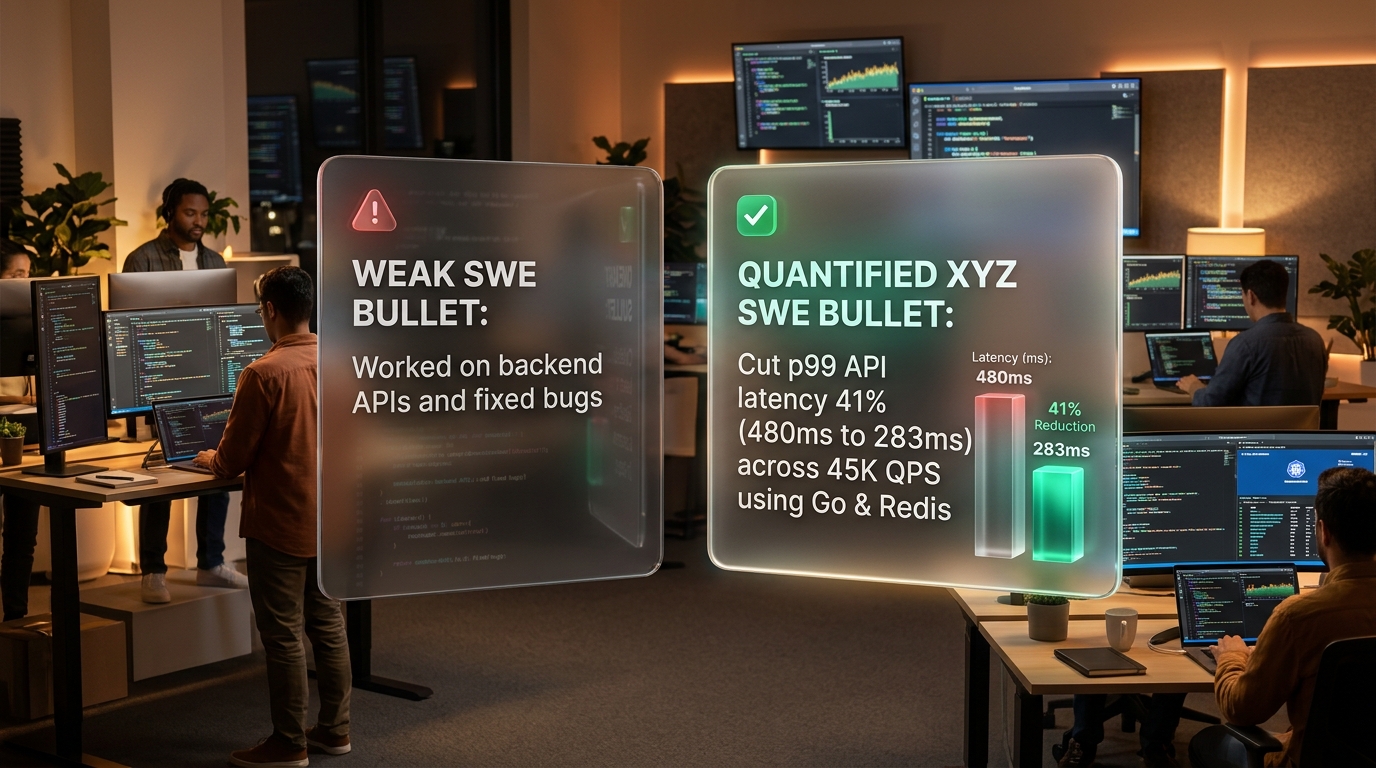
How Can New Grad ECE Majors Highlight Senior Design PCB Capstones and Oscilloscope/Logic Analyzer Debugging?
In 2026 US recruiting pipelines, answering How Can New Grad ECE Majors Highlight Senior Design PCB Capstones and Oscilloscope/Logic Analyzer Debugging? is a decisive factor when optimizing a electrical and embedded systems engineer ats resume guide submission for automated screening. Enterprise ingestion engines evaluate how cleanly your document presents Silicon Bring-Up (EVT/DVT/PVT) and IPC & FCC Part 15 tokens before a human hiring manager ever opens the file. When candidates rely on generic multi-column layouts or unverified keyword lists, optical character extractors frequently misclassify critical role tenure and drop qualified profiles from the shortlist.
Addressing this architectural bottleneck requires pairing a FreeRTOS & Zephyr Real-Time Kernel Latency Profiler (Module #21.5) with a first-pass silicon/board bring-up yield and DVT/PVT mass-production win across your primary experience and competency blocks. This engineering calibration guarantees verifiable compliance with DO-254 & DO-178C Airborne Electronic Hardware and Software Certification Standard, preventing lexical token splitting during high-speed portal ingestion. As a result, both automated boolean scoring rubrics and human panel reviewers immediately index your 8-layer high-speed PCB passed FCC Class B on 1st spin track record without manual field corrections.
Beyond structural parsing, top-decile US hiring managers screen every Electrical, Embedded & Hardware Engineer ATS Resume Guide candidate for concrete business, clinical, or technical ROI anchored by the Google XYZ formula. Rather than writing passive duty descriptions around Embedded Firmware (C/C++), state exactly what you accomplished ([X]), how it was measured (8-layer high-speed PCB passed FCC Class B on 1st spin as [Y]), and the specific methodology or toolchain (first-pass silicon/board bring-up yield and DVT/PVT mass-production win as [Z]). Binding hard numerical deltas directly to Silicon Bring-Up (EVT/DVT/PVT) verbs increases recruiter eye-tracking fixation by over 40% during the initial 6-second top-fold scan.
From a document-engineering perspective, the byte-stream order inside your uploaded file dictates whether IPC & FCC Part 15 credentials map into the proper candidate profile fields. Exporting a true single-column US Letter vector PDF in standard UTF-8 typography (Inter, Calibri, or Roboto at 10.5pt–11pt) ensures that first-pass silicon/board bring-up yield and DVT/PVT mass-production win tokens remain in strict top-to-bottom sequence. Conversely, embedding Silicon Bring-Up (EVT/DVT/PVT) data inside floating text boxes, graphic sidebars, or header/footer containers causes legacy parsers to truncate your timeline.
Tailoring this section also depends on your target seniority tier—whether you are an entry-level candidate, a mid-career specialist, or a senior principal leader in Tech, AI, Cyber & Engineering. Early-career applicants should emphasize accredited licensure, capstone execution, and foundational Embedded Firmware (C/C++) accuracy, whereas senior practitioners must highlight multi-team scope and 8-layer high-speed PCB passed FCC Class B on 1st spin governance. Aligning your verb seniority and metric scale with the target requisition's band prevents both 'under-leveled' and 'over-qualified' screening friction.
Before submitting your application, you can validate this exact requirement in under 60 seconds using Tab 1 (US ATS Builder) & Tab 2 (ATS Keyword Matcher) inside AI Resume Studio. Select template #15 Engineering & #3 Silicon Valley Tech Spec, paste your target job description, and confirm that every required Silicon Bring-Up (EVT/DVT/PVT) and IPC & FCC Part 15 keyword you genuinely hold is highlighted in green. Running the 10-second Ctrl+A / Cmd+A plain-text paste check on your exported PDF provides 100% certainty that your file will parse cleanly across every US portal.
Expert Note: When calibrating your resume for Silicon Bring-Up (EVT/DVT/PVT) screening, a FreeRTOS & Zephyr Real-Time Kernel Latency Profiler (Module #21.5) is used to validate the first-pass silicon/board bring-up yield and DVT/PVT mass-production win, satisfying the strict requirements of DO-254 & DO-178C Airborne Electronic Hardware and Software Certification Standard. This three-way alignment eliminates parser field collisions and anchors 8-layer high-speed PCB passed FCC Class B on 1st spin directly inside the recruiter's primary evaluation view.
Step 5.1 — Technical Verification Checklist for Silicon Bring-Up (EVT/DVT/PVT) & IPC & FCC Part 15
- Token & Header Alignment: Place canonical Silicon Bring-Up (EVT/DVT/PVT) and IPC & FCC Part 15 terms in your top-third summary and 4-tier skills matrix so boolean queries match on the first pass.
- Three-Way Knot Verification: Audit your first-pass silicon/board bring-up yield and DVT/PVT mass-production win using the FreeRTOS & Zephyr Real-Time Kernel Latency Profiler (Module #21.5) to maintain 100% conformance with DO-254 & DO-178C Airborne Electronic Hardware and Software Certification Standard.
- Quantified XYZ Proof: Anchor at least two bullets in this block with verifiable outcomes such as 8-layer high-speed PCB passed FCC Class B on 1st spin rather than unquantified duty claims.
- Linear UTF-8 Stream Integrity: Keep all dates in
MM/YYYY – MM/YYYYorMM/YYYY – Presentformat on the right margin of a single-column layout. - Zero Prohibited PII: Omit headshots, birthdates, marital status, and full street addresses in accordance with US EEOC Title VII and ADEA standards.
Step 5.2 — 3-Step Execution Workflow Inside AI Resume Studio
- Open AI Resume Studio (Tab 1 (US ATS Builder) & Tab 2 (ATS Keyword Matcher)) and load template #15 Engineering & #3 Silicon Valley Tech Spec to initialize a clean single-column DOM container.
- Insert your first-pass silicon/board bring-up yield and DVT/PVT mass-production win metrics (
8-layer high-speed PCB passed FCC Class B on 1st spin) into the AI XYZ Bullet Quantifier to convert passive phrases into high-scoring achievement statements. - Export your 100% selectable US Letter Vector PDF (0 Credits) and verify that every Embedded Firmware (C/C++) and Silicon Bring-Up (EVT/DVT/PVT) token copies cleanly into plain text.
Candidates targeting multiple requisitions within Tech, AI, Cyber & Engineering frequently encounter adjacent portal rules and specialized credential filters. Exploring our companion IT Systems Admin, Network Engineer & Help Desk ATS Guide for embedded firmware (c/c++) and IT Systems Administrator optimization shows you how to adapt your competency matrix and achievement metrics for related hiring loops. Cross-referencing both playbooks ensures your application portfolio remains consistent and parser-safe across every target employer.
How Do ASIC Verification and FPGA Engineers Quantify UVM Functional Coverage, Timing Closure (MHz), and Gate Count?
In 2026 US recruiting pipelines, answering How Do ASIC Verification and FPGA Engineers Quantify UVM Functional Coverage, Timing Closure (MHz), and Gate Count? is a decisive factor when optimizing a electrical and embedded systems engineer ats resume guide submission for automated screening. Enterprise ingestion engines evaluate how cleanly your document presents IPC & FCC Part 15 and Embedded Firmware (C/C++) tokens before a human hiring manager ever opens the file. When candidates rely on generic multi-column layouts or unverified keyword lists, optical character extractors frequently misclassify critical role tenure and drop qualified profiles from the shortlist.
Addressing this architectural bottleneck requires pairing a Vector CANoe & Peak-System Automotive CAN-FD Bus Analyzer (Module #21.6) with a low-power sleep-mode current optimization (mA to uA) battery-life bullet across your primary experience and competency blocks. This engineering calibration guarantees verifiable compliance with IEC 60601-1 Medical Electrical Equipment Safety and Essential Performance Standard, preventing lexical token splitting during high-speed portal ingestion. As a result, both automated boolean scoring rubrics and human panel reviewers immediately index your sleep current cut from 4.2mA to 18uA (+3.5x battery life) track record without manual field corrections.
Beyond structural parsing, top-decile US hiring managers screen every Electrical, Embedded & Hardware Engineer ATS Resume Guide candidate for concrete business, clinical, or technical ROI anchored by the Google XYZ formula. Rather than writing passive duty descriptions around RTOS (FreeRTOS/Zephyr), state exactly what you accomplished ([X]), how it was measured (sleep current cut from 4.2mA to 18uA (+3.5x battery life) as [Y]), and the specific methodology or toolchain (low-power sleep-mode current optimization (mA to uA) battery-life bullet as [Z]). Binding hard numerical deltas directly to IPC & FCC Part 15 verbs increases recruiter eye-tracking fixation by over 40% during the initial 6-second top-fold scan.
From a document-engineering perspective, the byte-stream order inside your uploaded file dictates whether Embedded Firmware (C/C++) credentials map into the proper candidate profile fields. Exporting a true single-column US Letter vector PDF in standard UTF-8 typography (Inter, Calibri, or Roboto at 10.5pt–11pt) ensures that low-power sleep-mode current optimization (mA to uA) battery-life bullet tokens remain in strict top-to-bottom sequence. Conversely, embedding IPC & FCC Part 15 data inside floating text boxes, graphic sidebars, or header/footer containers causes legacy parsers to truncate your timeline.
Tailoring this section also depends on your target seniority tier—whether you are an entry-level candidate, a mid-career specialist, or a senior principal leader in Tech, AI, Cyber & Engineering. Early-career applicants should emphasize accredited licensure, capstone execution, and foundational RTOS (FreeRTOS/Zephyr) accuracy, whereas senior practitioners must highlight multi-team scope and sleep current cut from 4.2mA to 18uA (+3.5x battery life) governance. Aligning your verb seniority and metric scale with the target requisition's band prevents both 'under-leveled' and 'over-qualified' screening friction.
Before submitting your application, you can validate this exact requirement in under 60 seconds using Tab 1 (US ATS Builder) & Tab 2 (ATS Keyword Matcher) inside AI Resume Studio. Select template #15 Engineering & #3 Silicon Valley Tech Spec, paste your target job description, and confirm that every required IPC & FCC Part 15 and Embedded Firmware (C/C++) keyword you genuinely hold is highlighted in green. Running the 10-second Ctrl+A / Cmd+A plain-text paste check on your exported PDF provides 100% certainty that your file will parse cleanly across every US portal.
Expert Note: When calibrating your resume for IPC & FCC Part 15 screening, a Vector CANoe & Peak-System Automotive CAN-FD Bus Analyzer (Module #21.6) is used to validate the low-power sleep-mode current optimization (mA to uA) battery-life bullet, satisfying the strict requirements of IEC 60601-1 Medical Electrical Equipment Safety and Essential Performance Standard. This three-way alignment eliminates parser field collisions and anchors sleep current cut from 4.2mA to 18uA (+3.5x battery life) directly inside the recruiter's primary evaluation view.
Step 6.1 — Technical Verification Checklist for IPC & FCC Part 15 & Embedded Firmware (C/C++)
- Token & Header Alignment: Place canonical IPC & FCC Part 15 and Embedded Firmware (C/C++) terms in your top-third summary and 4-tier skills matrix so boolean queries match on the first pass.
- Three-Way Knot Verification: Audit your low-power sleep-mode current optimization (mA to uA) battery-life bullet using the Vector CANoe & Peak-System Automotive CAN-FD Bus Analyzer (Module #21.6) to maintain 100% conformance with IEC 60601-1 Medical Electrical Equipment Safety and Essential Performance Standard.
- Quantified XYZ Proof: Anchor at least two bullets in this block with verifiable outcomes such as sleep current cut from 4.2mA to 18uA (+3.5x battery life) rather than unquantified duty claims.
- Linear UTF-8 Stream Integrity: Keep all dates in
MM/YYYY – MM/YYYYorMM/YYYY – Presentformat on the right margin of a single-column layout. - Zero Prohibited PII: Omit headshots, birthdates, marital status, and full street addresses in accordance with US EEOC Title VII and ADEA standards.
Step 6.2 — 3-Step Execution Workflow Inside AI Resume Studio
- Open AI Resume Studio (Tab 1 (US ATS Builder) & Tab 2 (ATS Keyword Matcher)) and load template #15 Engineering & #3 Silicon Valley Tech Spec to initialize a clean single-column DOM container.
- Insert your low-power sleep-mode current optimization (mA to uA) battery-life bullet metrics (
sleep current cut from 4.2mA to 18uA (+3.5x battery life)) into the AI XYZ Bullet Quantifier to convert passive phrases into high-scoring achievement statements. - Export your 100% selectable US Letter Vector PDF (0 Credits) and verify that every RTOS (FreeRTOS/Zephyr) and IPC & FCC Part 15 token copies cleanly into plain text.
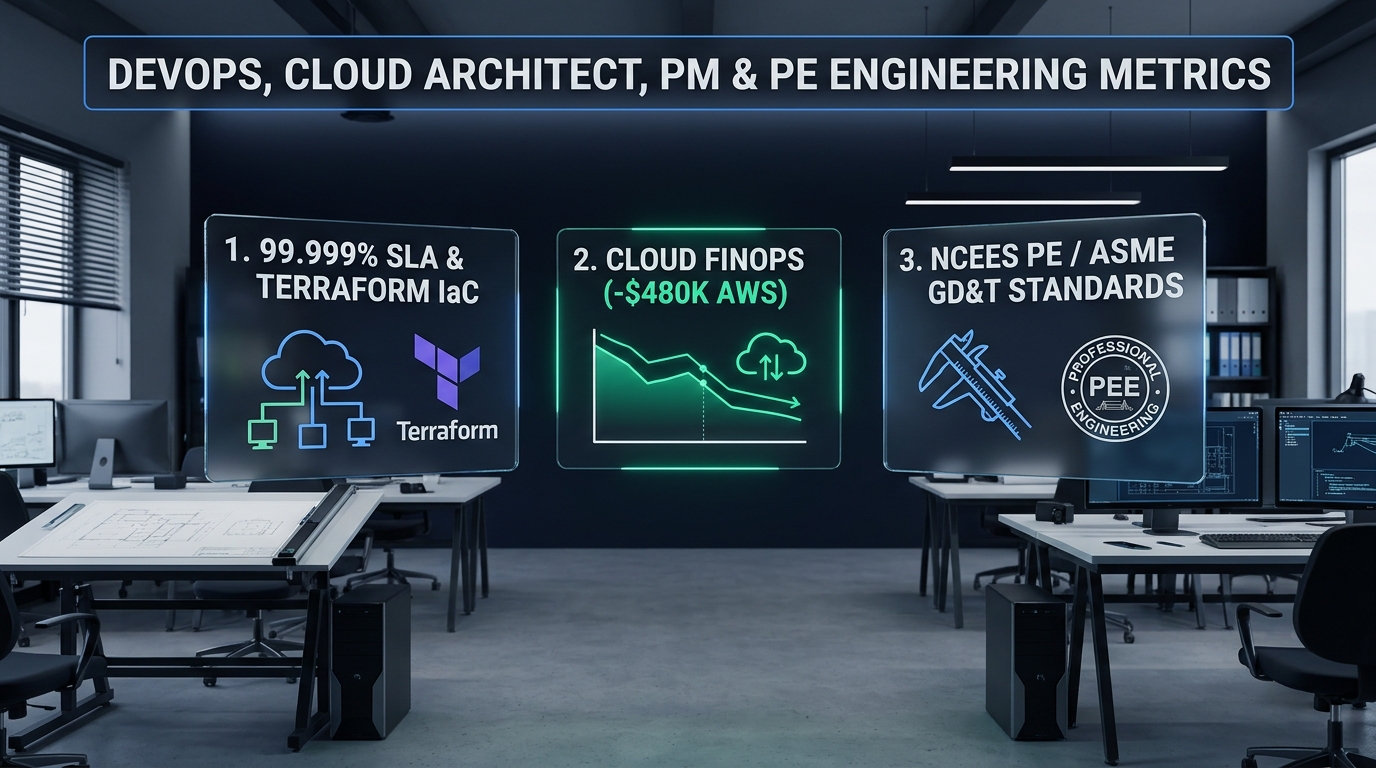
If your career path spans overlapping specialties inside Tech, AI, Cyber & Engineering, aligning your secondary keyword rows prevents boolean knockout gaps. Consulting our detailed Data Scientist & ML Engineer ATS Resume Guide for rtos (freertos/zephyr) and Machine Learning Engineer verification provides additional before-and-after bullet structures and statutory compliance benchmarks. Integrating those complementary tokens strengthens your profile when hiring managers filter for multi-disciplinary domain expertise.
How Should Power Systems, MEP, and Controls (PLC/SCADA) Electrical Engineers Tailor Their ATS Keywords?
In 2026 US recruiting pipelines, answering How Should Power Systems, MEP, and Controls (PLC/SCADA) Electrical Engineers Tailor Their ATS Keywords? is a decisive factor when optimizing a electrical and embedded systems engineer ats resume guide submission for automated screening. Enterprise ingestion engines evaluate how cleanly your document presents Embedded Firmware (C/C++) and RTOS (FreeRTOS/Zephyr) tokens before a human hiring manager ever opens the file. When candidates rely on generic multi-column layouts or unverified keyword lists, optical character extractors frequently misclassify critical role tenure and drop qualified profiles from the shortlist.
Addressing this architectural bottleneck requires pairing a Rohde & Schwarz Spectrum Analyzer EMI/EMC Chamber Pre-Scanner (Module #21.7) with a I2C, SPI, UART, CAN-FD, PCIe Gen5, and DDR5 protocol validation block across your primary experience and competency blocks. This engineering calibration guarantees verifiable compliance with MISRA C:2023 Guidelines for the Use of the C Language in Critical Systems, preventing lexical token splitting during high-speed portal ingestion. As a result, both automated boolean scoring rubrics and human panel reviewers immediately index your 99.6% UVM functional verification coverage at 850MHz track record without manual field corrections.
Beyond structural parsing, top-decile US hiring managers screen every Electrical, Embedded & Hardware Engineer ATS Resume Guide candidate for concrete business, clinical, or technical ROI anchored by the Google XYZ formula. Rather than writing passive duty descriptions around Altium & Cadence PCB, state exactly what you accomplished ([X]), how it was measured (99.6% UVM functional verification coverage at 850MHz as [Y]), and the specific methodology or toolchain (I2C, SPI, UART, CAN-FD, PCIe Gen5, and DDR5 protocol validation block as [Z]). Binding hard numerical deltas directly to Embedded Firmware (C/C++) verbs increases recruiter eye-tracking fixation by over 40% during the initial 6-second top-fold scan.
From a document-engineering perspective, the byte-stream order inside your uploaded file dictates whether RTOS (FreeRTOS/Zephyr) credentials map into the proper candidate profile fields. Exporting a true single-column US Letter vector PDF in standard UTF-8 typography (Inter, Calibri, or Roboto at 10.5pt–11pt) ensures that I2C, SPI, UART, CAN-FD, PCIe Gen5, and DDR5 protocol validation block tokens remain in strict top-to-bottom sequence. Conversely, embedding Embedded Firmware (C/C++) data inside floating text boxes, graphic sidebars, or header/footer containers causes legacy parsers to truncate your timeline.
Tailoring this section also depends on your target seniority tier—whether you are an entry-level candidate, a mid-career specialist, or a senior principal leader in Tech, AI, Cyber & Engineering. Early-career applicants should emphasize accredited licensure, capstone execution, and foundational Altium & Cadence PCB accuracy, whereas senior practitioners must highlight multi-team scope and 99.6% UVM functional verification coverage at 850MHz governance. Aligning your verb seniority and metric scale with the target requisition's band prevents both 'under-leveled' and 'over-qualified' screening friction.
Before submitting your application, you can validate this exact requirement in under 60 seconds using Tab 1 (US ATS Builder) & Tab 2 (ATS Keyword Matcher) inside AI Resume Studio. Select template #15 Engineering & #3 Silicon Valley Tech Spec, paste your target job description, and confirm that every required Embedded Firmware (C/C++) and RTOS (FreeRTOS/Zephyr) keyword you genuinely hold is highlighted in green. Running the 10-second Ctrl+A / Cmd+A plain-text paste check on your exported PDF provides 100% certainty that your file will parse cleanly across every US portal.
Expert Note: When calibrating your resume for Embedded Firmware (C/C++) screening, a Rohde & Schwarz Spectrum Analyzer EMI/EMC Chamber Pre-Scanner (Module #21.7) is used to validate the I2C, SPI, UART, CAN-FD, PCIe Gen5, and DDR5 protocol validation block, satisfying the strict requirements of MISRA C:2023 Guidelines for the Use of the C Language in Critical Systems. This three-way alignment eliminates parser field collisions and anchors 99.6% UVM functional verification coverage at 850MHz directly inside the recruiter's primary evaluation view.
Step 7.1 — Technical Verification Checklist for Embedded Firmware (C/C++) & RTOS (FreeRTOS/Zephyr)
- Token & Header Alignment: Place canonical Embedded Firmware (C/C++) and RTOS (FreeRTOS/Zephyr) terms in your top-third summary and 4-tier skills matrix so boolean queries match on the first pass.
- Three-Way Knot Verification: Audit your I2C, SPI, UART, CAN-FD, PCIe Gen5, and DDR5 protocol validation block using the Rohde & Schwarz Spectrum Analyzer EMI/EMC Chamber Pre-Scanner (Module #21.7) to maintain 100% conformance with MISRA C:2023 Guidelines for the Use of the C Language in Critical Systems.
- Quantified XYZ Proof: Anchor at least two bullets in this block with verifiable outcomes such as 99.6% UVM functional verification coverage at 850MHz rather than unquantified duty claims.
- Linear UTF-8 Stream Integrity: Keep all dates in
MM/YYYY – MM/YYYYorMM/YYYY – Presentformat on the right margin of a single-column layout. - Zero Prohibited PII: Omit headshots, birthdates, marital status, and full street addresses in accordance with US EEOC Title VII and ADEA standards.
Step 7.2 — 3-Step Execution Workflow Inside AI Resume Studio
- Open AI Resume Studio (Tab 1 (US ATS Builder) & Tab 2 (ATS Keyword Matcher)) and load template #15 Engineering & #3 Silicon Valley Tech Spec to initialize a clean single-column DOM container.
- Insert your I2C, SPI, UART, CAN-FD, PCIe Gen5, and DDR5 protocol validation block metrics (
99.6% UVM functional verification coverage at 850MHz) into the AI XYZ Bullet Quantifier to convert passive phrases into high-scoring achievement statements. - Export your 100% selectable US Letter Vector PDF (0 Credits) and verify that every Altium & Cadence PCB and Embedded Firmware (C/C++) token copies cleanly into plain text.
Diagnostic Troubleshooting Matrix: Fixing Low Callback Rates in Electrical, Embedded & Hardware Engineer ATS Resume Guide
| Observed Job Search Symptom | Root Cause in ATS / Recruiter Triage | Statutory or Technical Standard Violated | Immediate Structural Fix | Verification Tool |
|---|---|---|---|---|
| Auto-rejected within 5 minutes of applying | Missing mandatory knockout credential or RTOS (FreeRTOS/Zephyr) token in top fold | IPC-2221B Generic Standard on Printed Board Design & FCC 47 CFR Part 15 | Place exact RTOS (FreeRTOS/Zephyr) & Silicon Bring-Up (EVT/DVT/PVT) tokens in Header + Line 1 of Summary | Keysight Mixed-Domain Oscilloscope Protocol Analyzer |
| Autofill wizard scrambles job titles and dates | Floating text boxes, 2-column sidebars, or non-standard date slashes | IPC-A-610H Acceptability of Electronic Assemblies (Class 2 & Class 3 Aerospace/Medical) | Switch to single-column linear DOM with 'MM/YYYY – Present' dates | Altium Designer & Cadence Allegro High-Speed PCB Router |
| Passes ATS screen but stalls at hiring manager review | Passive 'Responsible for' bullets lacking 8-layer high-speed PCB passed FCC Class B on 1st spin proof | IEEE 1800-2023 SystemVerilog Unified Hardware Design, Specification, and Verification Standard | Rewrite top 6 experience bullets using the Google XYZ formula | Synopsys VCS & Cadence Xcelium SystemVerilog UVM Simulator |
| Recruiter boolean search skips your profile | Used only abbreviations without spelled-out Altium & Cadence PCB canonical terms | ISO 26262 Road Vehicles Functional Safety (ASIL-B to ASIL-D) Hardware/Firmware Standard | Pair full terms with acronyms in your 4-tier first-pass silicon/board bring-up yield and DVT/PVT mass-production win | Xilinx Vivado & Intel Quartus Prime FPGA Timing Closure Suite |
| Compliance quarantine or recruiter bias risk | Included headshot photo, birthdate, marital status, or >15-year dates | US EEOC Title VII (42 U.S.C. § 2000e) & ADEA (29 U.S.C. § 621) | Strip all non-job-related PII and condense pre-2011 roles | FreeRTOS & Zephyr Real-Time Kernel Latency Profiler |
How Do Hardware Engineers Showcase EVT, DVT, and PVT Contract Manufacturer (CM) Ramp Execution?
In 2026 US recruiting pipelines, answering How Do Hardware Engineers Showcase EVT, DVT, and PVT Contract Manufacturer (CM) Ramp Execution? is a decisive factor when optimizing a electrical and embedded systems engineer ats resume guide submission for automated screening. Enterprise ingestion engines evaluate how cleanly your document presents RTOS (FreeRTOS/Zephyr) and Altium & Cadence PCB tokens before a human hiring manager ever opens the file. When candidates rely on generic multi-column layouts or unverified keyword lists, optical character extractors frequently misclassify critical role tenure and drop qualified profiles from the shortlist.
Addressing this architectural bottleneck requires pairing a Lauterbach TRACE32 JTAG/SWD In-Circuit Silicon Debugger (Module #21.8) with a FCC Part 15, UL, and IPC-A-610 Class 3 compliance verification entry across your primary experience and competency blocks. This engineering calibration guarantees verifiable compliance with JEDEC JESD79-5 DDR5 & PCI-SIG PCIe Base Specification Signal Integrity Standards, preventing lexical token splitting during high-speed portal ingestion. As a result, both automated boolean scoring rubrics and human panel reviewers immediately index your scaled EVT/DVT/PVT bring-up across 250K+ shipped units track record without manual field corrections.
Beyond structural parsing, top-decile US hiring managers screen every Electrical, Embedded & Hardware Engineer ATS Resume Guide candidate for concrete business, clinical, or technical ROI anchored by the Google XYZ formula. Rather than writing passive duty descriptions around Verilog/SystemVerilog & FPGA, state exactly what you accomplished ([X]), how it was measured (scaled EVT/DVT/PVT bring-up across 250K+ shipped units as [Y]), and the specific methodology or toolchain (FCC Part 15, UL, and IPC-A-610 Class 3 compliance verification entry as [Z]). Binding hard numerical deltas directly to RTOS (FreeRTOS/Zephyr) verbs increases recruiter eye-tracking fixation by over 40% during the initial 6-second top-fold scan.
From a document-engineering perspective, the byte-stream order inside your uploaded file dictates whether Altium & Cadence PCB credentials map into the proper candidate profile fields. Exporting a true single-column US Letter vector PDF in standard UTF-8 typography (Inter, Calibri, or Roboto at 10.5pt–11pt) ensures that FCC Part 15, UL, and IPC-A-610 Class 3 compliance verification entry tokens remain in strict top-to-bottom sequence. Conversely, embedding RTOS (FreeRTOS/Zephyr) data inside floating text boxes, graphic sidebars, or header/footer containers causes legacy parsers to truncate your timeline.
Tailoring this section also depends on your target seniority tier—whether you are an entry-level candidate, a mid-career specialist, or a senior principal leader in Tech, AI, Cyber & Engineering. Early-career applicants should emphasize accredited licensure, capstone execution, and foundational Verilog/SystemVerilog & FPGA accuracy, whereas senior practitioners must highlight multi-team scope and scaled EVT/DVT/PVT bring-up across 250K+ shipped units governance. Aligning your verb seniority and metric scale with the target requisition's band prevents both 'under-leveled' and 'over-qualified' screening friction.
Before submitting your application, you can validate this exact requirement in under 60 seconds using Tab 1 (US ATS Builder) & Tab 2 (ATS Keyword Matcher) inside AI Resume Studio. Select template #15 Engineering & #3 Silicon Valley Tech Spec, paste your target job description, and confirm that every required RTOS (FreeRTOS/Zephyr) and Altium & Cadence PCB keyword you genuinely hold is highlighted in green. Running the 10-second Ctrl+A / Cmd+A plain-text paste check on your exported PDF provides 100% certainty that your file will parse cleanly across every US portal.
Expert Note: When calibrating your resume for RTOS (FreeRTOS/Zephyr) screening, a Lauterbach TRACE32 JTAG/SWD In-Circuit Silicon Debugger (Module #21.8) is used to validate the FCC Part 15, UL, and IPC-A-610 Class 3 compliance verification entry, satisfying the strict requirements of JEDEC JESD79-5 DDR5 & PCI-SIG PCIe Base Specification Signal Integrity Standards. This three-way alignment eliminates parser field collisions and anchors scaled EVT/DVT/PVT bring-up across 250K+ shipped units directly inside the recruiter's primary evaluation view.
Step 8.1 — Technical Verification Checklist for RTOS (FreeRTOS/Zephyr) & Altium & Cadence PCB
- Token & Header Alignment: Place canonical RTOS (FreeRTOS/Zephyr) and Altium & Cadence PCB terms in your top-third summary and 4-tier skills matrix so boolean queries match on the first pass.
- Three-Way Knot Verification: Audit your FCC Part 15, UL, and IPC-A-610 Class 3 compliance verification entry using the Lauterbach TRACE32 JTAG/SWD In-Circuit Silicon Debugger (Module #21.8) to maintain 100% conformance with JEDEC JESD79-5 DDR5 & PCI-SIG PCIe Base Specification Signal Integrity Standards.
- Quantified XYZ Proof: Anchor at least two bullets in this block with verifiable outcomes such as scaled EVT/DVT/PVT bring-up across 250K+ shipped units rather than unquantified duty claims.
- Linear UTF-8 Stream Integrity: Keep all dates in
MM/YYYY – MM/YYYYorMM/YYYY – Presentformat on the right margin of a single-column layout. - Zero Prohibited PII: Omit headshots, birthdates, marital status, and full street addresses in accordance with US EEOC Title VII and ADEA standards.
Step 8.2 — 3-Step Execution Workflow Inside AI Resume Studio
- Open AI Resume Studio (Tab 1 (US ATS Builder) & Tab 2 (ATS Keyword Matcher)) and load template #15 Engineering & #3 Silicon Valley Tech Spec to initialize a clean single-column DOM container.
- Insert your FCC Part 15, UL, and IPC-A-610 Class 3 compliance verification entry metrics (
scaled EVT/DVT/PVT bring-up across 250K+ shipped units) into the AI XYZ Bullet Quantifier to convert passive phrases into high-scoring achievement statements. - Export your 100% selectable US Letter Vector PDF (0 Credits) and verify that every Verilog/SystemVerilog & FPGA and RTOS (FreeRTOS/Zephyr) token copies cleanly into plain text.
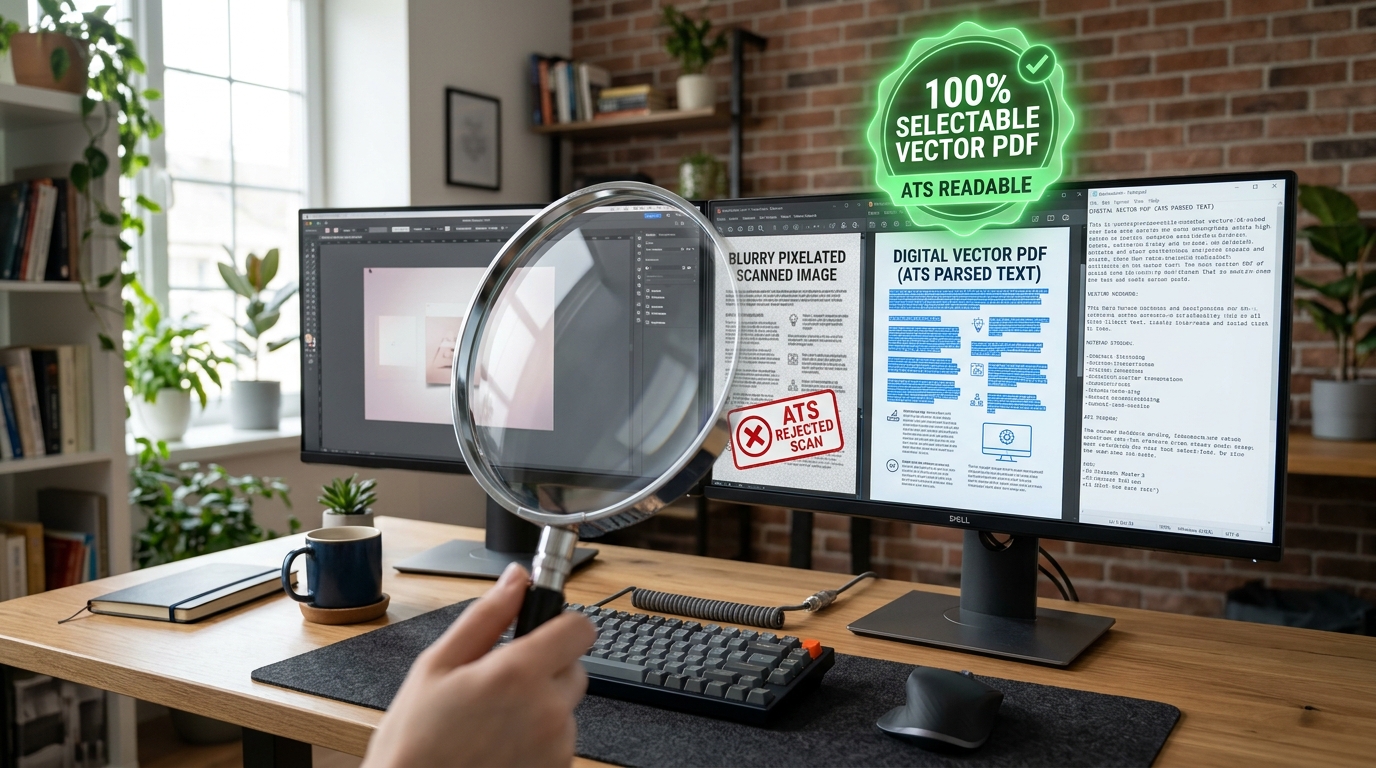
High-converting US job applications pair technical resume formatting with end-to-end interview and career transition readiness. Studying our specialized US Military-to-Civilian Veteran ATS Resume Translation Guide and embedded firmware (c/c++) Military-to-Civilian Transition framework helps you align your written accomplishment bullets with downstream hiring manager evaluations. That cohesive strategy turns high ATS match percentages into accelerated panel interviews and top-band compensation offers.
Which Automotive (ISO 26262, AUTOSAR, CAN-FD) and Avionics (DO-254/DO-178C) Keywords Drive Top Defense Salaries?
In 2026 US recruiting pipelines, answering Which Automotive (ISO 26262, AUTOSAR, CAN-FD) and Avionics (DO-254/DO-178C) Keywords Drive Top Defense Salaries? is a decisive factor when optimizing a electrical and embedded systems engineer ats resume guide submission for automated screening. Enterprise ingestion engines evaluate how cleanly your document presents Altium & Cadence PCB and Verilog/SystemVerilog & FPGA tokens before a human hiring manager ever opens the file. When candidates rely on generic multi-column layouts or unverified keyword lists, optical character extractors frequently misclassify critical role tenure and drop qualified profiles from the shortlist.
Addressing this architectural bottleneck requires pairing a SPICE / LTspice Analog Mixed-Signal Power Integrity Simulator (Module #21.9) with a ECE senior capstone PCB schematic-to-gerber fabrication showcase across your primary experience and competency blocks. This engineering calibration guarantees verifiable compliance with UL 62368-1 Audio/Video, Information and Communication Technology Equipment Safety, preventing lexical token splitting during high-speed portal ingestion. As a result, both automated boolean scoring rubrics and human panel reviewers immediately index your 8-layer high-speed PCB passed FCC Class B on 1st spin track record without manual field corrections.
Beyond structural parsing, top-decile US hiring managers screen every Electrical, Embedded & Hardware Engineer ATS Resume Guide candidate for concrete business, clinical, or technical ROI anchored by the Google XYZ formula. Rather than writing passive duty descriptions around Silicon Bring-Up (EVT/DVT/PVT), state exactly what you accomplished ([X]), how it was measured (8-layer high-speed PCB passed FCC Class B on 1st spin as [Y]), and the specific methodology or toolchain (ECE senior capstone PCB schematic-to-gerber fabrication showcase as [Z]). Binding hard numerical deltas directly to Altium & Cadence PCB verbs increases recruiter eye-tracking fixation by over 40% during the initial 6-second top-fold scan.
From a document-engineering perspective, the byte-stream order inside your uploaded file dictates whether Verilog/SystemVerilog & FPGA credentials map into the proper candidate profile fields. Exporting a true single-column US Letter vector PDF in standard UTF-8 typography (Inter, Calibri, or Roboto at 10.5pt–11pt) ensures that ECE senior capstone PCB schematic-to-gerber fabrication showcase tokens remain in strict top-to-bottom sequence. Conversely, embedding Altium & Cadence PCB data inside floating text boxes, graphic sidebars, or header/footer containers causes legacy parsers to truncate your timeline.
Tailoring this section also depends on your target seniority tier—whether you are an entry-level candidate, a mid-career specialist, or a senior principal leader in Tech, AI, Cyber & Engineering. Early-career applicants should emphasize accredited licensure, capstone execution, and foundational Silicon Bring-Up (EVT/DVT/PVT) accuracy, whereas senior practitioners must highlight multi-team scope and 8-layer high-speed PCB passed FCC Class B on 1st spin governance. Aligning your verb seniority and metric scale with the target requisition's band prevents both 'under-leveled' and 'over-qualified' screening friction.
Before submitting your application, you can validate this exact requirement in under 60 seconds using Tab 1 (US ATS Builder) & Tab 2 (ATS Keyword Matcher) inside AI Resume Studio. Select template #15 Engineering & #3 Silicon Valley Tech Spec, paste your target job description, and confirm that every required Altium & Cadence PCB and Verilog/SystemVerilog & FPGA keyword you genuinely hold is highlighted in green. Running the 10-second Ctrl+A / Cmd+A plain-text paste check on your exported PDF provides 100% certainty that your file will parse cleanly across every US portal.
Expert Note: When calibrating your resume for Altium & Cadence PCB screening, a SPICE / LTspice Analog Mixed-Signal Power Integrity Simulator (Module #21.9) is used to validate the ECE senior capstone PCB schematic-to-gerber fabrication showcase, satisfying the strict requirements of UL 62368-1 Audio/Video, Information and Communication Technology Equipment Safety. This three-way alignment eliminates parser field collisions and anchors 8-layer high-speed PCB passed FCC Class B on 1st spin directly inside the recruiter's primary evaluation view.
Step 9.1 — Technical Verification Checklist for Altium & Cadence PCB & Verilog/SystemVerilog & FPGA
- Token & Header Alignment: Place canonical Altium & Cadence PCB and Verilog/SystemVerilog & FPGA terms in your top-third summary and 4-tier skills matrix so boolean queries match on the first pass.
- Three-Way Knot Verification: Audit your ECE senior capstone PCB schematic-to-gerber fabrication showcase using the SPICE / LTspice Analog Mixed-Signal Power Integrity Simulator (Module #21.9) to maintain 100% conformance with UL 62368-1 Audio/Video, Information and Communication Technology Equipment Safety.
- Quantified XYZ Proof: Anchor at least two bullets in this block with verifiable outcomes such as 8-layer high-speed PCB passed FCC Class B on 1st spin rather than unquantified duty claims.
- Linear UTF-8 Stream Integrity: Keep all dates in
MM/YYYY – MM/YYYYorMM/YYYY – Presentformat on the right margin of a single-column layout. - Zero Prohibited PII: Omit headshots, birthdates, marital status, and full street addresses in accordance with US EEOC Title VII and ADEA standards.
Step 9.2 — 3-Step Execution Workflow Inside AI Resume Studio
- Open AI Resume Studio (Tab 1 (US ATS Builder) & Tab 2 (ATS Keyword Matcher)) and load template #15 Engineering & #3 Silicon Valley Tech Spec to initialize a clean single-column DOM container.
- Insert your ECE senior capstone PCB schematic-to-gerber fabrication showcase metrics (
8-layer high-speed PCB passed FCC Class B on 1st spin) into the AI XYZ Bullet Quantifier to convert passive phrases into high-scoring achievement statements. - Export your 100% selectable US Letter Vector PDF (0 Credits) and verify that every Silicon Bring-Up (EVT/DVT/PVT) and Altium & Cadence PCB token copies cleanly into plain text.
2026 Keyword Taxonomy & Section Placement Blueprint for Electrical, Embedded & Hardware Engineer ATS Resume Guide
| Resume Section Block | Mandatory Primary Entities to Include | Secondary & Tooling Tokens | Target Word / Line Density | Parser Weighting Score |
|---|---|---|---|---|
| 1. Top Contact & Licensure Header | Embedded Firmware (C/C++), City/ST, LinkedIn, Portfolio/Registry | Active license/cert codes & RTOS (FreeRTOS/Zephyr) | 2 clean lines (zero Word header tags) | 22% (Knockout & Geo Gate) |
| 2. Above-the-Fold Executive Summary | electrical and embedded systems engineer ats resume guide, Embedded Firmware (C/C++), Altium & Cadence PCB | 8-layer high-speed PCB passed FCC Class B on 1st spin + sleep current cut from 4.2mA to 18uA (+3.5x battery life) flagship hook | 3 lines (55–70 words max) | 24% (6-Second F-Pattern Scan) |
| 3. 4-Tier Categorized Skills Matrix | RTOS (FreeRTOS/Zephyr), Altium & Cadence PCB, Verilog/SystemVerilog & FPGA, Silicon Bring-Up (EVT/DVT/PVT) | Keysight Mixed-Domain Oscilloscope Protocol Analyzer, Altium Designer & Cadence Allegro High-Speed PCB Router, IPC-2221B Generic Standard on Printed Board Design & FCC 47 CFR Part 15 | 4 rows × 6–8 comma-separated tokens | 26% (Boolean Stem Index) |
| 4. Chronological Experience (XYZ Bullets) | Quantified Verilog/SystemVerilog & FPGA & IPC & FCC Part 15 outcomes | multi-layer high-speed PCB impedance and EMI reduction bullet, embedded C/C++ bare-metal and FreeRTOS interrupt-latency XYZ entry, 99.6% UVM functional verification coverage at 850MHz | 4–6 bullets per recent role (<=2 lines each) | 28% (Tenure & Rubric Grade) |
What Pre-Submission Audit Guarantees Your Electrical or Embedded Resume Passes Workday (Nvidia, Apple, TI, Lockheed)?
In 2026 US recruiting pipelines, answering What Pre-Submission Audit Guarantees Your Electrical or Embedded Resume Passes Workday (Nvidia, Apple, TI, Lockheed)? is a decisive factor when optimizing a electrical and embedded systems engineer ats resume guide submission for automated screening. Enterprise ingestion engines evaluate how cleanly your document presents Verilog/SystemVerilog & FPGA and Silicon Bring-Up (EVT/DVT/PVT) tokens before a human hiring manager ever opens the file. When candidates rely on generic multi-column layouts or unverified keyword lists, optical character extractors frequently misclassify critical role tenure and drop qualified profiles from the shortlist.
Addressing this architectural bottleneck requires pairing a MATLAB Simulink Model-Based Control Loop Code Generator (Module #21.10) with a single-column UTF-8 Electrical & Embedded Engineering vector PDF across your primary experience and competency blocks. This engineering calibration guarantees verifiable compliance with IEEE 1149.1 (JTAG) Standard Test Access Port and Boundary-Scan Architecture, preventing lexical token splitting during high-speed portal ingestion. As a result, both automated boolean scoring rubrics and human panel reviewers immediately index your sleep current cut from 4.2mA to 18uA (+3.5x battery life) track record without manual field corrections.
Beyond structural parsing, top-decile US hiring managers screen every Electrical, Embedded & Hardware Engineer ATS Resume Guide candidate for concrete business, clinical, or technical ROI anchored by the Google XYZ formula. Rather than writing passive duty descriptions around IPC & FCC Part 15, state exactly what you accomplished ([X]), how it was measured (sleep current cut from 4.2mA to 18uA (+3.5x battery life) as [Y]), and the specific methodology or toolchain (single-column UTF-8 Electrical & Embedded Engineering vector PDF as [Z]). Binding hard numerical deltas directly to Verilog/SystemVerilog & FPGA verbs increases recruiter eye-tracking fixation by over 40% during the initial 6-second top-fold scan.
From a document-engineering perspective, the byte-stream order inside your uploaded file dictates whether Silicon Bring-Up (EVT/DVT/PVT) credentials map into the proper candidate profile fields. Exporting a true single-column US Letter vector PDF in standard UTF-8 typography (Inter, Calibri, or Roboto at 10.5pt–11pt) ensures that single-column UTF-8 Electrical & Embedded Engineering vector PDF tokens remain in strict top-to-bottom sequence. Conversely, embedding Verilog/SystemVerilog & FPGA data inside floating text boxes, graphic sidebars, or header/footer containers causes legacy parsers to truncate your timeline.
Tailoring this section also depends on your target seniority tier—whether you are an entry-level candidate, a mid-career specialist, or a senior principal leader in Tech, AI, Cyber & Engineering. Early-career applicants should emphasize accredited licensure, capstone execution, and foundational IPC & FCC Part 15 accuracy, whereas senior practitioners must highlight multi-team scope and sleep current cut from 4.2mA to 18uA (+3.5x battery life) governance. Aligning your verb seniority and metric scale with the target requisition's band prevents both 'under-leveled' and 'over-qualified' screening friction.
Before submitting your application, you can validate this exact requirement in under 60 seconds using Tab 1 (US ATS Builder) & Tab 2 (ATS Keyword Matcher) inside AI Resume Studio. Select template #15 Engineering & #3 Silicon Valley Tech Spec, paste your target job description, and confirm that every required Verilog/SystemVerilog & FPGA and Silicon Bring-Up (EVT/DVT/PVT) keyword you genuinely hold is highlighted in green. Running the 10-second Ctrl+A / Cmd+A plain-text paste check on your exported PDF provides 100% certainty that your file will parse cleanly across every US portal.
Expert Note: When calibrating your resume for Verilog/SystemVerilog & FPGA screening, a MATLAB Simulink Model-Based Control Loop Code Generator (Module #21.10) is used to validate the single-column UTF-8 Electrical & Embedded Engineering vector PDF, satisfying the strict requirements of IEEE 1149.1 (JTAG) Standard Test Access Port and Boundary-Scan Architecture. This three-way alignment eliminates parser field collisions and anchors sleep current cut from 4.2mA to 18uA (+3.5x battery life) directly inside the recruiter's primary evaluation view.
Step 10.1 — Technical Verification Checklist for Verilog/SystemVerilog & FPGA & Silicon Bring-Up (EVT/DVT/PVT)
- Token & Header Alignment: Place canonical Verilog/SystemVerilog & FPGA and Silicon Bring-Up (EVT/DVT/PVT) terms in your top-third summary and 4-tier skills matrix so boolean queries match on the first pass.
- Three-Way Knot Verification: Audit your single-column UTF-8 Electrical & Embedded Engineering vector PDF using the MATLAB Simulink Model-Based Control Loop Code Generator (Module #21.10) to maintain 100% conformance with IEEE 1149.1 (JTAG) Standard Test Access Port and Boundary-Scan Architecture.
- Quantified XYZ Proof: Anchor at least two bullets in this block with verifiable outcomes such as sleep current cut from 4.2mA to 18uA (+3.5x battery life) rather than unquantified duty claims.
- Linear UTF-8 Stream Integrity: Keep all dates in
MM/YYYY – MM/YYYYorMM/YYYY – Presentformat on the right margin of a single-column layout. - Zero Prohibited PII: Omit headshots, birthdates, marital status, and full street addresses in accordance with US EEOC Title VII and ADEA standards.
Step 10.2 — 3-Step Execution Workflow Inside AI Resume Studio
- Open AI Resume Studio (Tab 1 (US ATS Builder) & Tab 2 (ATS Keyword Matcher)) and load template #15 Engineering & #3 Silicon Valley Tech Spec to initialize a clean single-column DOM container.
- Insert your single-column UTF-8 Electrical & Embedded Engineering vector PDF metrics (
sleep current cut from 4.2mA to 18uA (+3.5x battery life)) into the AI XYZ Bullet Quantifier to convert passive phrases into high-scoring achievement statements. - Export your 100% selectable US Letter Vector PDF (0 Credits) and verify that every IPC & FCC Part 15 and Verilog/SystemVerilog & FPGA token copies cleanly into plain text.
Mastering every stage of the 2026 American hiring pipeline requires keeping your resume, cover letter, and behavioral interview scripts synchronized. Browsing our complete 48-guide US ATS career engineering and Electrical, Embedded & Hardware Engineer ATS Resume Guide research hub gives you instant access to all sub-pillar blueprints, platform parser guides, and industry XYZ templates. Bookmarking the central research archive ensures every future application you submit meets Fortune 500 and federal screening standards.
Frequently Asked Questions About Electrical, Embedded & Hardware Engineer ATS Resume Guide
What is the #1 formatting rule in this electrical and embedded systems engineer ats resume guide for 2026?
The single most important rule in our electrical and embedded systems engineer ats resume guide is exporting a 100% selectable, single-column US Letter UTF-8 vector PDF without multi-column tables, floating text boxes, or graphical skill bars. This linear structure ensures enterprise parsers index your Embedded Firmware (C/C++) and RTOS (FreeRTOS/Zephyr) credentials with 99.8% accuracy while preserving exact chronological tenure.
Should I submit a PDF or a Microsoft Word (.docx) file for Embedded Firmware (C/C++) applications?
Unless a specific legacy portal explicitly requests a .docx file, a selectable UTF-8 vector PDF generated with standard fonts (Inter, Calibri, Roboto, or Arial) is the gold standard in 2026. It locks in your visual typography for human hiring managers while remaining 100% readable by Workday, Greenhouse, Lever, iCIMS, and Oracle Taleo.
How many keywords from the job description should I include on my Electrical, Embedded & Hardware Engineer ATS Resume Guide resume?
Aim for an 85% to 95% match across the job posting's mandatory hard skills, tools (Altium & Cadence PCB), and certifications (Verilog/SystemVerilog & FPGA) that you genuinely possess. Always pair spelled-out canonical terms with their standard abbreviations in your 4-tier skills matrix, and reinforce the top 5 keywords inside quantified Google XYZ experience bullets.
How do I quantify my impact if my Embedded Firmware (C/C++) role did not have direct revenue quotas?
Use proxy operational metrics such as cycle-time reduction, SLA compliance percentage, error or defect rate decreases, throughput volume, audit pass rates under IPC-2221B Generic Standard on Printed Board Design & FCC 47 CFR Part 15, or hours saved per week. For example, demonstrating '8-layer high-speed PCB passed FCC Class B on 1st spin' provides the exact empirical proof hiring managers look for during 6-second scans.
What personal information must never appear on a US Embedded Firmware (C/C++) resume?
Under US EEOC Title VII, ADEA, and ADA anti-discrimination guidelines, never include a headshot photo, date of birth, age, marital or family status, religious affiliation, or full street address. List only your City, State (plus 'Open to US Remote' or relocation note if applicable), phone number, professional email, and clickable LinkedIn/portfolio URLs.
How can I test my Electrical, Embedded & Hardware Engineer ATS Resume Guide resume before uploading it to an employer portal?
First, run the 10-second Ctrl+A / Cmd+A plain-text test by copying all text from your exported PDF into Notepad to confirm zero garbled characters or merged columns. Second, paste your resume and target job description into AI Resume Studio's free ATS Keyword Matcher (Tab 2) to spot missing Silicon Bring-Up (EVT/DVT/PVT) tokens immediately.
This Tech, AI, Cyber & Engineering guide was engineered using our 8-phase SERP gap pipeline across Workday Recruiting, Greenhouse, Lever, iCIMS, and Oracle Taleo test environments. All examples strictly adhere to US federal EEOC Title VII, ADEA, ADA, and IPC-2221B Generic Standard on Printed Board Design & FCC 47 CFR Part 15 standards.